

Rizk casino Plinko
Introduction
I have seen plenty of casino products that try to look simple while hiding a fairly dense logic underneath. Plinko is one of the clearest examples. At first glance, it is almost disarmingly easy to understand: you choose a stake, set a few parameters, drop a ball, and watch it bounce through a field of pegs until it lands in a payout slot. That surface simplicity is exactly why Rizk casino Plinko catches attention so quickly. A new player can grasp the interface in seconds, but the actual session experience can vary sharply depending on risk level, board setup, and expectations.
For players in New Zealand looking at Rizk casino Plinko, the key point is not that the game is trendy or visually clean. The real question is what this format offers in practice. Plinko is less about long animations, bonus rounds, and themed storytelling, and more about immediate probability, visible randomness, and fast emotional feedback. Every drop creates a tiny suspense arc. Sometimes the result is modest and predictable. Sometimes a sequence of low returns is broken by a high multiplier that changes the whole session. That contrast is the core of the appeal.
In this article, I will focus strictly on the Plinko game itself: how it works, why it feels different from slots and other real money games guide for Rizk Casino players, what the risk settings actually mean, and what a player should understand before pressing the first drop. My aim is practical. If you want to know whether Rizk casino Plinko is worth trying, you need more than a basic description. You need to understand how the game behaves over time.
What Plinko is and why it draws so much attention
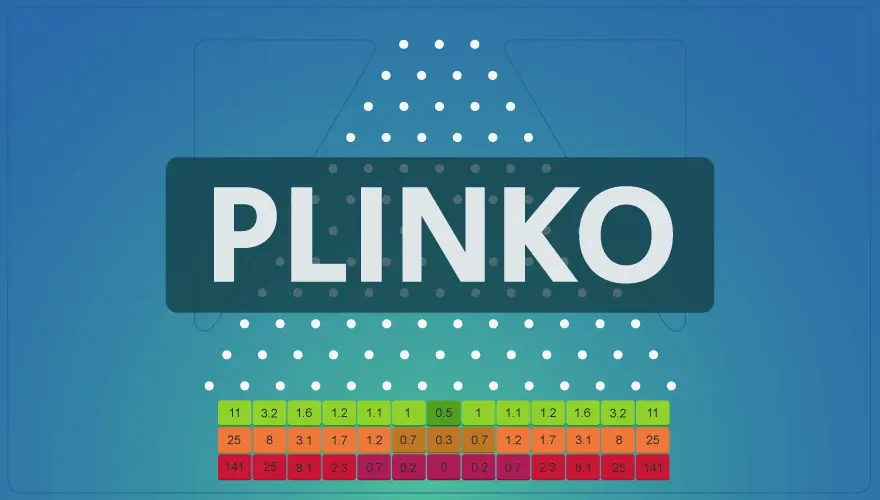
Plinko is a chance-based casino game built around a falling-ball model. The ball is released from the top of the board, hits multiple pegs on the way down, and eventually lands in one of several slots at the bottom. Each slot carries its own multiplier. The central slots usually pay less, while the edge slots often hold the highest multipliers and appear less often. That layout immediately tells the player something important: the most dramatic outcomes are visible from the start, but they are not meant to happen regularly.
What makes Plinko stand out is the way it turns randomness into something the player can watch unfold step by step. In a slot, the result is effectively decided the moment the spin is triggered, even if the reels create a sense of progression. In Plinko, the descent creates a more physical illusion of chance. You see the ball ricochet left and right, and that visual journey makes each outcome feel tangible. Even experienced players who know the mathematics behind random number generation often react more strongly to a bouncing ball than to a static result screen.
That matters because attention in casino play is not driven only by payout potential. It is driven by perceived involvement. Plinko gives the player a stronger sense of watching probability happen in real time. This is one of the reasons the format became so noticeable across modern gaming platforms. It strips away decorative layers and leaves a direct relationship between stake, path, and multiplier.
There is also a second reason for its visibility: flexibility. In many Plinko versions, including the type players expect to find at Rizk casino, the experience can change significantly through adjustable risk settings and board configurations. So while the interface looks minimal, the actual style of play can shift from relatively steady to highly aggressive without changing the basic rules. That combination of accessibility and variability is rare.
How the Plinko board works in real play
To understand Rizk casino Plinko properly, it helps to ignore the visual simplicity for a moment and look at the structure. The board is made of rows of pegs. When the ball hits a peg, it deflects to one side or the other. After many such deflections, it lands in a payout segment at the bottom. The outcome is random, but the board is not random in a chaotic sense. It is designed around a distribution pattern in which central outcomes are more common and extreme edge outcomes are less frequent.
This is the practical heart of the game. Most drops are pulled toward the middle of the board because there are simply more route combinations that lead there. The outer slots require a more unusual sequence of left-right movements. That is why high multipliers sit on the edges. They are not just “better prizes”; they are mathematically less common destinations.
In session terms, this means a player should not judge Plinko by isolated drops. One of the most common mistakes is to see the board, notice the top multiplier, and mentally treat it as a realistic short-term target. It is better to think in distributions. The board is built to produce many ordinary results and occasional outliers. Once that clicks, the game becomes much easier to read.
| Element | What it does | Why it matters to the player |
|---|---|---|
| Ball drop | Starts the round with a fixed stake | Each result is quick, so bankroll movement can accelerate fast |
| Peg board | Creates the left-right path of the ball | Gives a visible form to randomness and builds suspense during every drop |
| Bottom slots | Assign multipliers to final landing positions | Shows clearly where low, medium, and rare high returns sit |
| Risk setting | Changes multiplier spread and result distribution | Directly affects session volatility and emotional pace |
| Rows or board size | Can alter path length and payout layout | Changes how often moderate versus extreme outcomes appear |
One detail I think many players underestimate is that Plinko feels transparent even when it is statistically harsh. Because you can see the ball travel, the result often feels easier to accept than a blunt losing spin on a slot. That does not make the session safer. It just changes the psychology of how losses and recoveries are experienced.
Why risk settings change the entire feel of the session
The risk selector is not a cosmetic option. In Plinko, it is often the setting that most strongly determines whether the game feels calm, frustrating, exciting, or exhausting. Low-risk mode usually compresses the payout range. You are more likely to see modest multipliers and less likely to hit dramatic extremes. High-risk mode stretches the distribution. That can introduce very large top-end multipliers, but it also tends to make low-value outcomes more common.
For the player, this changes much more than theoretical return patterns. It changes rhythm. Low-risk Plinko often produces a smoother session with less violent balance movement. High-risk Plinko creates longer dry patches and then asks whether a rare strong hit will compensate for them. The board may look almost identical, but the emotional profile is completely different.
I would summarise the practical difference like this:
Low risk suits players who want to observe the board, enjoy the flow, and avoid sharp balance swings on every short sequence of drops.
Medium risk usually offers a more balanced middle ground, where the session still has tension but does not become entirely dependent on rare edge landings.
High risk is for players who consciously accept that many rounds may return little before a rare multiplier changes the picture.
This is one of the most important things to understand before trying Rizk casino Plinko. The same game can feel reasonable or punishing depending on one setting. A player who says “Plinko is boring” may have played a low-risk board expecting explosive moments. A player who says “Plinko drains balance too fast” may have jumped straight into a high-risk setup without respecting how steep the distribution can become.
The pace of Plinko and why it feels different from many casino formats
Plinko has a distinctive tempo. The rounds are short, but not instantaneous. There is a brief visual journey from release to landing, and that tiny delay is enough to create anticipation. In practical terms, the game sits in an interesting space between instant-result products and slower, feature-driven slots. It does not ask for much cognitive effort, yet it can hold attention for long stretches because each drop carries a visible unresolved path.
That rhythm has consequences. First, it can encourage repetition. Since each round is fast and the controls are minimal, players can move through many drops in a short time without feeling the same friction they might feel in a more complex casino game. Second, the visual suspense can make near-miss style moments feel more personal. When the ball bounces close to a high multiplier and falls inward at the last second, the reaction is often stronger than the actual financial difference would justify.
This is one of the most memorable things about Plinko: it is mechanically simple, but emotionally noisy. The board does not need real money free spins, expanding symbols, or side features to create tension. A single bounce near the edge can do the job. That is efficient design. It is also why some players find the format hard to leave once a session starts to build momentum.
Another observation worth making is that Plinko often creates the illusion of a “readable streak.” After several central landings, some players start to believe the edges are due. After a rare high multiplier, others assume the board has become cold. In reality, each drop remains an independent event within the game’s probability model. The board looks physical, which tempts the mind to search for patterns, but pattern recognition here can be misleading.
What players should understand about probabilities and possible outcomes
The best way to approach Rizk casino Plinko is to think in terms of ranges, not promises. The board offers a spread of multipliers, but the visible spread is not the same thing as equal likelihood. Central results are common because they are structurally easier to reach. Edge results are rare because fewer paths lead there. This sounds obvious, yet many players still treat the board as if every slot is a live short-term contender.
What matters in practice is the relationship between three things: stake size, risk level, and session length. If you choose a high-risk board and use a stake that is too ambitious for your bankroll, the game can feel punishing very quickly. Not because anything unusual is happening, but because the distribution is doing exactly what it is designed to do. A few low returns are not a sign of malfunction. They are part of the model.
Here is the practical reading I recommend:
Do not anchor on the maximum multiplier. It is a headline number, not a baseline expectation.
Expect clusters of modest outcomes. That is normal board behaviour, especially around the centre.
Use the risk setting as a session tool, not a bragging choice. Higher is not automatically better.
Judge the experience by whether the rhythm suits you, not only by whether a rare hit appears early.
One of the more useful insights for new players is that Plinko can be mathematically unforgiving while still feeling fairer than some other casino products. That is not because the odds are inherently kinder. It is because the structure is easier to interpret. You can see why middling results happen often. You can see where the rare big returns sit. The logic is exposed rather than hidden behind themes or bonus layers.
How Plinko differs from slots and other casino games
The easiest comparison is with classic online slots, because many players arrive at Plinko expecting a similar experience. The difference is immediate. Slots are built around reel outcomes, payline logic, symbol combinations, and often multiple bonus systems. Plinko strips almost all of that away. There are no reels to track, no symbol hierarchy to learn, and usually no narrative wrapper. Instead, the core event is a single descent through a probability field.
That changes the player’s relationship with the game. In a slot, much of the tension comes from waiting for a feature trigger or chasing a bonus round that may reshape the whole session. In Plinko, tension is compressed into every drop. There is no need to unlock the interesting part later. The interesting part is the path itself and the multiplier at the end.
| Format | Main source of tension | Typical session feel | What stands out in comparison to Plinko |
|---|---|---|---|
| Plinko | Visible ball path and landing slot | Fast, direct, repetitive, suspenseful | Less decorative, more immediate, highly dependent on risk selection |
| Classic slots | Reel outcomes, bonus triggers, symbol combinations | Varied pacing with occasional feature spikes | More layered, often slower to reveal its best moments |
| Roulette | Single-number or section prediction | Clear betting logic and discrete rounds | Less visual progression during the result phase |
| Crash-style games | Timing of cash-out decision | Player decision adds pressure | Plinko is more passive once the drop begins |
Compared with roulette, Plinko feels more animated even though both are chance-led formats. Compared with crash games information inside Rizk Casino for detailed casino comparison, it asks less from the player in terms of timing and decision-making during the round. Compared with slots, it is much more transparent in how the result space is arranged. That combination makes it appealing to players who want something visual and fast without learning a deep ruleset.
But there is a trade-off. If you enjoy layered bonus design, evolving features, or strong themes, Plinko may feel too stripped back. It is a game of repeated probability events, not a cinematic experience. Whether that is a strength or a limitation depends entirely on what you want from a session.
Where Plinko performs well and where it can disappoint
Rizk casino Plinko has several strengths that are easy to recognise once you stop treating it like a slot. The first is clarity. The player can understand the basic structure almost instantly. The second is pace. Rounds move quickly without becoming entirely abrupt. The third is configurability. Risk levels and, in some versions, board settings allow the same core format to serve different temperaments.
There is also an underrated strength: Plinko is unusually good at showing the player what kind of experience they are buying into. Many casino products hide their true session profile behind attractive packaging. Plinko is more honest. If the high multipliers sit on the outer edges and the centre is packed with smaller returns, the board is telling you exactly how the tension is organised.
Still, the game has limits, and they matter. The most obvious is repetition. Because the action loop is so compact, some players will feel they have seen everything the format has to offer within a relatively short time. Another issue is emotional whiplash on high-risk settings. The board can generate a lot of anticipation without giving much back for extended stretches. For some players, that is the attraction. For others, it becomes draining.
I would also flag a subtle weakness: Plinko can look more controllable than it really is. Adjustable settings create a sense of agency, but once the drop starts, the player is mostly an observer. If someone enjoys making tactical choices during the round, this format may feel too passive after the novelty wears off.
Who is likely to enjoy Rizk casino Plinko and who may not
In my view, Plinko suits players who value directness. If you like casino games that explain themselves quickly, deliver immediate feedback, and let you shape the session through broad settings rather than detailed strategy, this format makes sense. It can also suit players who are tired of overloaded slot interfaces and want a cleaner probability-driven experience.
It is particularly suitable for players who understand that not every casino session needs a long feature ladder. Some people prefer a short loop with clear stakes and clear outcomes. Plinko does that well. It also works for players who want to experiment with session style. A lower-risk setup and a higher-risk setup can feel like two different products even though the board looks similar.
On the other hand, Plinko may not suit players who want sustained variety inside a single session. If your enjoyment depends on bonus rounds, changing symbols, side features, or progressive visual build-up, the format can start to feel one-note. It may also be a poor fit for players who react strongly to near misses, because the bouncing path naturally creates many “almost” moments.
There is another group that should be careful: players who confuse visible randomness with manageable randomness. The board is easy to watch, but that does not make outcomes easier to control. If you tend to chase rare multipliers because they appear physically close on the screen, Plinko can be more seductive than it looks.
What to check before starting a real session
Before launching Rizk casino Plinko, I recommend taking a minute to frame the session properly. That small pause can make the difference between a controlled test and a rushed run driven by edge-chasing. The game is simple enough that players often skip this step, but simplicity is exactly why discipline matters here.
The main points to check are practical rather than technical:
Choose the risk level deliberately. Do not default to high risk just because the multipliers look more exciting. A quick read of Aviator crash game guide at Rizk Casino for players who compare casino offers answers most questions about limits and account settings.
Match the stake to the speed of the game. Quick rounds mean your balance can move faster than expected.
Understand what would count as a good session for you. Are you testing the format, looking for steady action, or chasing rare spikes?
Use demo mode if available. It is one of the best ways to feel the rhythm of the board before spending real money.
This is also where I would add one of my strongest practical observations: Plinko often reveals a player’s tolerance for variance faster than slots do. Within a short sample, you can usually tell whether the game’s bounce-and-wait rhythm suits you. If it does not click early, forcing a longer session rarely improves the experience.
Another useful observation is that low-risk Plinko is not automatically “safe” in the everyday sense. It is simply less jagged. Players sometimes hear “low risk” and assume the session will be gentle by default. The better interpretation is narrower distribution, not guaranteed comfort.
Final verdict on Rizk casino Plinko
Rizk casino Plinko offers a focused, probability-driven experience built around one deceptively simple idea: drop a ball, follow the path, and accept where it lands. What it really sells is not complexity, but clarity. The board makes the tension visible. The risk settings reshape the session in meaningful ways. The pace is quick enough to stay engaging, yet long enough per round to create real suspense.
Its strongest points are easy to define. Plinko is accessible, visually readable, and capable of producing very different session moods depending on how the player configures it. It does not need layers of bonus design to hold attention. The bouncing descent does that work on its own. For players who enjoy direct casino formats and can respect the distribution behind the multipliers, that is a genuine strength.
The caution is equally clear. The game can become repetitive, high-risk settings can burn through a balance quickly, and the visible path can tempt players into overreading patterns that are not really there. Plinko may look gentle because the interface is clean, but the session pressure can build fast, especially when rare edge outcomes start to feel emotionally “close.”
So, is Rizk casino Plinko worth trying? Yes, if you want a fast, transparent casino game where the appeal comes from watching randomness unfold in plain sight. No, if you need layered features, strategic decision-making during the round, or a heavily themed slot-style experience. In practical terms, Plinko works best for players who appreciate simple rules, understand variance, and want a format that gets to the point immediately. That is what it genuinely offers, and it is also where its limits begin.
FAQ
What does Plinko gameplay involve before the ball starts dropping?
Plinko uses a set board of pegs where each ball drops from the selected point and bounces toward the slots at the bottom. The result determines the multiplier linked to the slot it lands in. Before launch, players typically choose the stake level and confirm the real-money or demo mode.
How does the multiplier work in Plinko ball drops?
Each landing area is tied to a multiplier, so the payout outcome depends on where the ball finishes. The multiplier may vary across different outcome zones. The game balance reflects the overall risk level of the table.
Is Plinko more comparable to slots or live casino tables on Rizk?
Plinko is closer to a quick casino game with randomized ball outcomes rather than classic live dealer rounds. Live casino tables focus on a dealer stream and player decisions in real time. Plinko typically runs as a self-contained casino game with its own multiplier zones and fast round cycles.